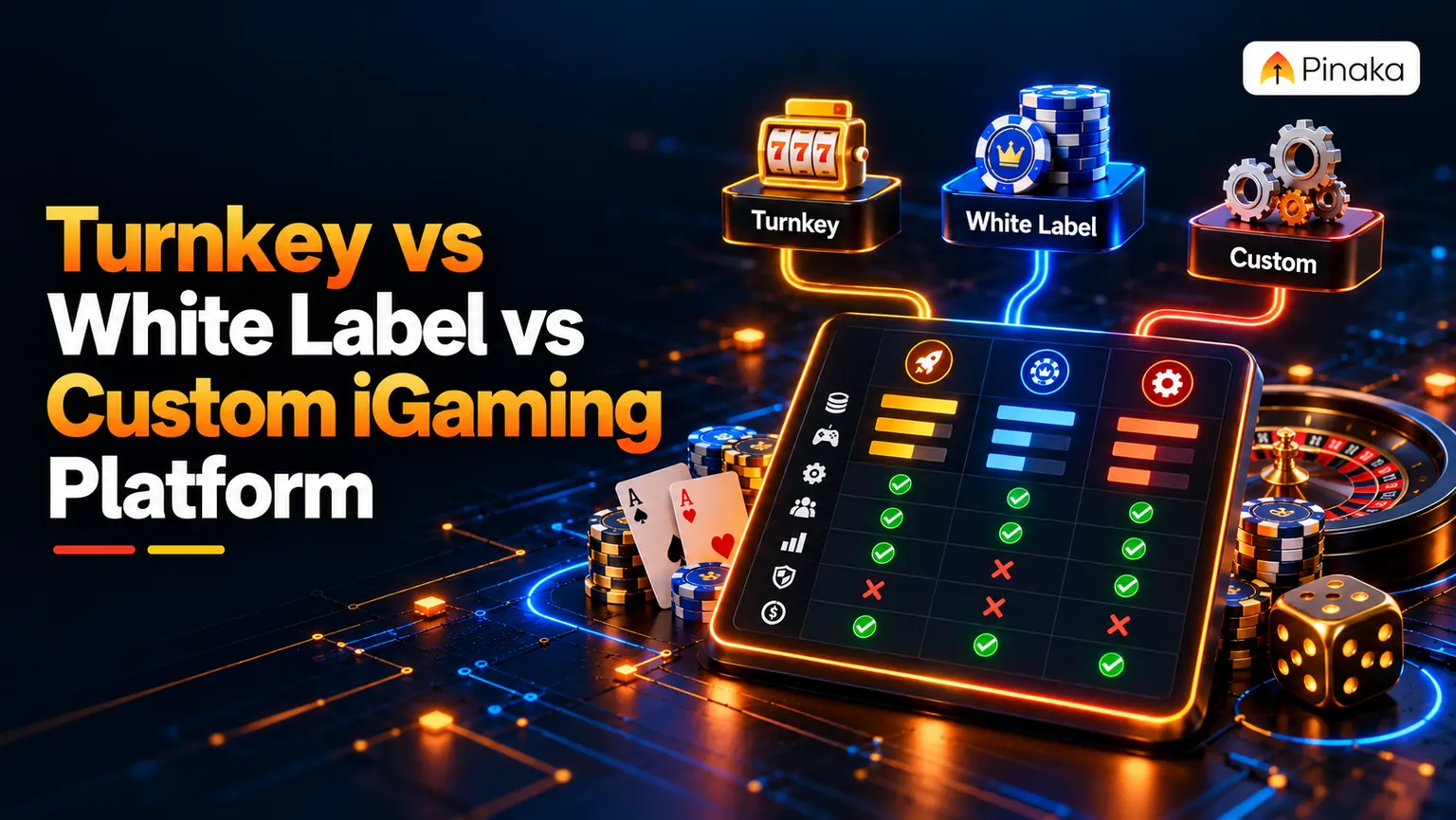
Turnkey, White Label and Custom are three common iGaming platform models. However, each balances launch speed, control and technical responsibility differently. Therefore, operators should base their choice on the target market, licensing structure, integrations and long-term costs.
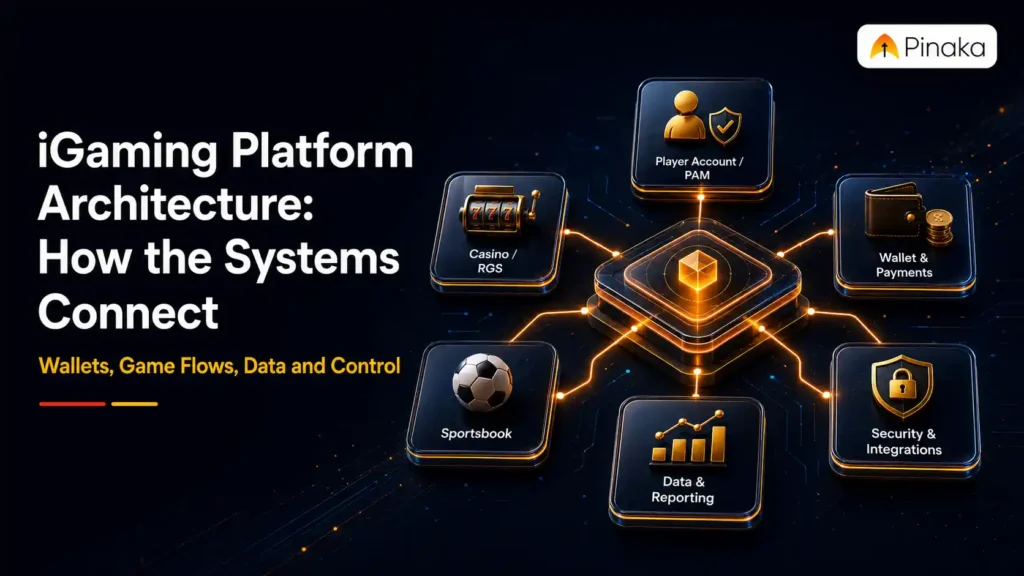
These labels do not have standard definitions. Providers package technology and services differently. As a result, your contract and jurisdiction determine your rights and responsibilities. This guide compares their costs, ownership and control, with practical checks to help you choose an approach.
Key Takeaways
- 01White Label: speed firstUsually prioritises launch speed and lower operator-side technology work.
- 02Turnkey: speed plus controlA pre-built platform with potentially broader operational control.
- 03Custom: deeper product controlGreater flexibility, supported by stronger technical capability.
- 04Check rights, costs and exitVerify licensing, IP, data access and lifecycle costs—not just the label.
iGaming Platform Models at a Glance
The table compares common patterns across Turnkey, White Label and Custom. However, these are not guaranteed features. Use it to shortlist a model, then verify the provider’s scope and contractual terms.
| Decision factor | White Label | Turnkey | Custom |
|---|---|---|---|
| Launch approach | Existing platform and services | Pre-built stack configured for the operator | Development around specific requirements |
| Product control | Branding and permitted configuration | Broader configuration and integrations | Deepest potential architecture and product control |
| Core software IP | Usually provider-owned | Usually licensed from the provider | Defined by the development agreement |
| Internal technology work | Typically lower | Shared with the provider | Typically higher, internally or through partners |
| Primary fit | Speed and market validation | Speed with wider operational flexibility | Differentiation and a long-term technology strategy |
Licensing and data rights need separate checks across all three models. In other words, the platform category does not settle either issue.
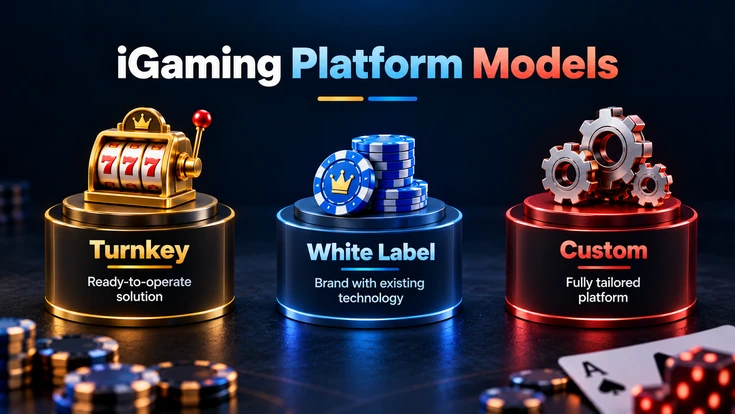
What iGaming Platform Models Include
White Label: an established platform and service framework
A White Label arrangement typically uses the provider’s existing technology, infrastructure and integrations. Instead of developing the platform, the operator focuses on its brand and commercial operation within the agreed service framework. As a result, less platform development is usually required before launch.
However, the provider may control the available payment options, integrations and product roadmap. Therefore, confirm which changes you can request, who approves them and how the provider prices additional work.
Turnkey: a pre-built stack with broader configuration
For example, a Turnkey platform may combine the back office, game aggregation, payments, analytics, front end and hosting. As a result, the operator receives a working technology foundation rather than building every component.
Compared with White Label, the arrangement may offer more control over configuration and operations. Still, the provider can retain the core software IP and set limits on development. Check the included services, supported integrations and division of technical work.
Custom: development around specific operating needs
Custom development uses an internal team, an external partner or both to build around defined requirements. For example, it can provide greater control over architecture, user experience, integrations, data design and the product roadmap.
That flexibility brings ongoing engineering, testing and maintenance commitments. Moreover, commissioning a platform does not automatically transfer every software right. Therefore, the development agreement must identify what the operator owns and what remains licensed.
If the decision also involves combining bought and bespoke components, review our build vs buy iGaming platform guide.
Ownership, Licensing and Data: What to Verify
Across iGaming platform models, brand ownership and software rights require separate checks. Regulatory responsibility and data access also depend on the arrangement. However, brand ownership does not guarantee platform ownership or the rights needed to change suppliers.
Software IP and development rights
White Label and Turnkey providers commonly retain the core platform IP. By contrast, ownership in Custom development depends on the agreement and applicable law. For example, UK copyright guidance explains that commissioned work does not automatically belong to the commissioner without an agreement covering ownership.
- Ownership and access: define source-code assignment, repository access and rights to bespoke functionality.
- Use and modification: confirm deployment, licensing and modification rights, including third-party and open-source restrictions.
- Continuity: require documentation, clear maintenance responsibilities and rights needed for an exit or handover.
Licensing and compliance responsibilities
White Label arrangements can be provider-led, while Turnkey and Custom operations may be structured around the operator’s own licence. However, these are common patterns, not universal rules. Confirm the permitted structure for the target jurisdiction before selecting a model.
In Great Britain, the Gambling Commission’s White Label guidance makes clear that the licensed operator remains responsible for its White Label sites. Therefore, a commercial agreement cannot simply transfer away that regulatory responsibility.
Document who handles regulatory reporting, KYC and AML processes, responsible-gambling controls, testing records and supplier oversight. In addition, establish which controls the platform supplies and which processes the operator must run.
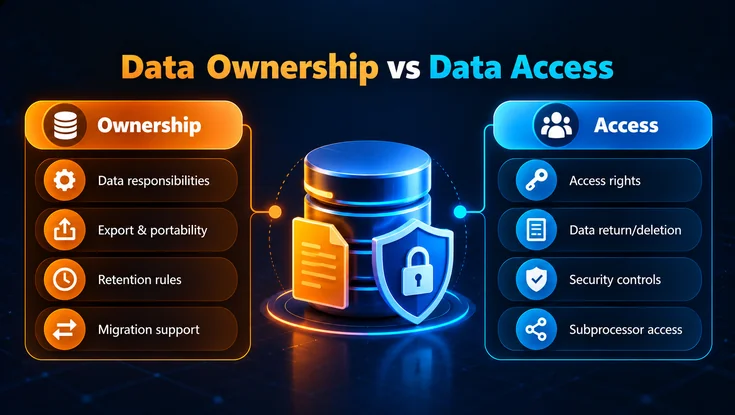
Data access, processing and portability
“Who owns the data?” is not enough. Instead, check who can access records, use them for permitted purposes and export them in a usable form. Hosting location and retention requirements also affect the operating arrangement.
For UK GDPR purposes, the ICO’s controller and processor guidance focuses on who determines the purposes and means of processing. Therefore, assess those roles separately; the platform label does not settle them.
- Define access to operational data and historical records, along with export formats and frequency.
- Agree security responsibilities, subprocessors, retention periods and return or deletion procedures.
- Specify migration assistance. Individual data-protection portability rights do not automatically provide a complete operator migration package.
Launch Speed, Product Control and Team Requirements
What determines launch speed?
White Label often has the shortest technology setup because the platform is already in place. Turnkey can also launch quickly, although configuration and integrations add work. By contrast, Custom development normally needs more time for design, engineering and validation.
Nevertheless, a ready platform does not mean a market-ready operation. For instance, licensing, payment onboarding, content availability and technical approvals can affect every model. For example, the Gambling Commission’s testing strategy sets requirements for relevant remote gambling software in Great Britain.
Match control to the team that will use it
White Label usually reduces operator-side infrastructure and engineering work, but the business still needs people to manage commercial operations and coordinate requirements. In comparison, Turnkey often involves shared delivery. The provider maintains the core stack while the operator manages configuration, integrations and acceptance testing.
Custom requires sustained product, engineering, DevOps, QA and integration capability, whether employed or contracted. Therefore, assess the whole operating team rather than the initial build budget alone.
When comparing iGaming platform models, practical control depends on your team’s capacity. For example, a well-supported Turnkey platform with documented APIs may offer more usable flexibility. In contrast, a bespoke system can be harder to adapt when its team is overstretched.
Integrations: Check What You Can Change
Payment providers, KYC services, game aggregation, CRM, analytics and risk tools shape daily operations. In addition, other dependencies can include sportsbook feeds, responsible-gambling tools, affiliate systems and customer support. Evaluate the connections your business actually needs.
For a clearer view of those dependencies, see our iGaming platform architecture guide. Then ask each shortlisted provider:
- Can we choose and replace payment providers, CRM systems and other key services?
- Who builds, owns and maintains each integration, and who pays for changes?
- Are APIs documented and accessible to our team or delivery partner?
- Can integration-related records be exported and carried into a migration?
As a result, these checks can reveal restrictions that a product demonstration may not show. Also confirm approval times, support arrangements and the effect of an integration change on certification or platform upgrades.
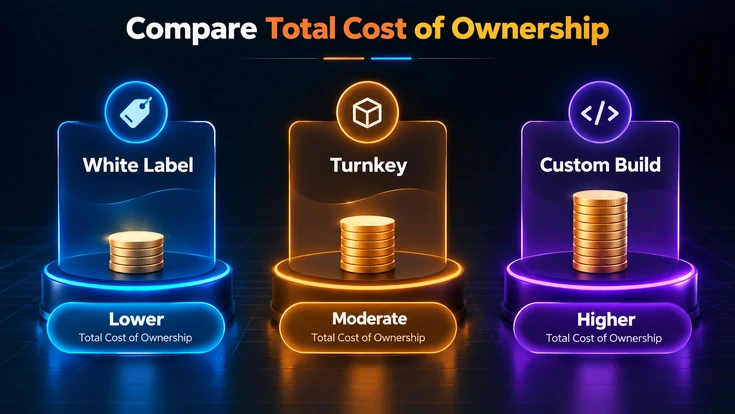
Costs Across iGaming Platform Models
For example, a low setup fee can hide ongoing charges or expensive changes. Conversely, a larger build budget does not guarantee lower lifetime costs. Therefore, compare quotes over the same operating period, with consistent assumptions for volume, scope and staffing.
- Initial delivery
- Setup and brand configuration
- Recurring charges
- Platform and service fees; possible revenue share
- Changes and integrations
- Provider-priced additions within its ecosystem
- People and compliance
- Operator processes plus contracted support
- Exit and migration
- Exports, support and termination charges
- Initial delivery
- Platform setup, configuration and additions
- Recurring charges
- Licence, service and hosting fees; contract-specific revenue share
- Changes and integrations
- Integration fees and agreed development work
- People and compliance
- Operator team plus shared technical delivery
- Exit and migration
- Handover and transition under agreed terms
- Initial delivery
- Design, engineering, testing and launch
- Recurring charges
- Infrastructure, support and third-party licences
- Changes and integrations
- Build, maintenance and engineering capacity
- People and compliance
- Ongoing product, technical and compliance capability
- Exit and migration
- Transition work and dependency replacement
White Label typically reduces initial technology work but can increase reliance on provider pricing. In comparison, Turnkey balances a pre-built base with paid extensions. Custom shifts more spending towards engineering and maintenance, while external service and licensing costs can still remain.
Also include certification, future development and operational support in the forecast. There is no universal price crossover between the models because contract terms and business assumptions determine the result.
Plan for Growth and an Eventual Exit
Test technical and business scalability
Technical scalability means supporting more players, transactions, traffic and data at acceptable performance levels. Therefore, ask for relevant capacity evidence and establish who handles infrastructure changes, monitoring and incident response.
Business scalability is different. For example, it includes adding products, brands, markets, payment providers and customer-management systems. As a result, each expansion may need new permissions, integrations or commercial terms.
For example, White Label can tie growth to the provider’s platform, licensing framework and roadmap. In comparison, Turnkey may offer more flexibility while retaining core dependencies. Custom can reduce some restrictions, but cloud services, development partners and third-party software can create others.
Our guide to how iGaming technology needs change from launch to migration explores this longer-term planning. However, more customisation alone does not guarantee independence.
Agree migration terms before signing
- Data
- identify export formats, historical coverage, delivery times and retention obligations.
- Technical handover
- confirm API access, documentation and rights to continue using or modifying bespoke code.
- Commercial exit
- specify notice periods, termination fees, transition charges and migration support.
- Dependencies
- check which third-party agreements and software rights survive termination.
Even a flexible platform can be difficult to leave when these terms are missing. Therefore, evaluate the exit route during procurement, before the business decides to move.
Choosing Between iGaming Platform Models
First, choose between Turnkey, White Label and Custom based on the control your operation needs. Then check whether your team and launch plan can support it. Next, use the three starting points below to shape your shortlist.
White Label
White Label can fit when an established platform supports your market-validation plan and you can work within the provider’s service framework.
Check: permitted licensing structure, available integrations and limits on product changes.Turnkey
In comparison, Turnkey can fit when you want a pre-built stack with broader configuration and can manage shared delivery responsibilities.
Check: API access, integration choice and who maintains each part of the stack.Custom
For Custom, weigh specific product or architecture needs against a longer build and sustained engineering support.
Check: software ownership, maintenance capacity and third-party dependencies.Before you shortlist
- Market and launch: confirm permitted licensing arrangements and required approvals before comparing delivery timelines.
- Team and growth: match responsibilities to your operating capacity, then test future brands, markets, data access and supplier changes.
For a broader procurement framework, read how to choose the right iGaming solution. Also evaluate demonstrated capability and contractual rights alongside the provider’s delivery label.
Where Pinaka.games Fits in the Evaluation
A platform discussion with Pinaka.games should start with your operating requirements: target market, licensing approach, product scope, payments, data needs and available resources. As a result, these inputs help define an appropriate technology and implementation route.
The aim is not to treat one model as universally best. Instead, establish the required scope, responsibilities and long-term flexibility, then confirm the proposed arrangement in the agreement.
Conclusion
Among iGaming platform models, White Label usually prioritises speed and lower technology responsibility. In comparison, Turnkey offers a pre-built foundation with potentially broader operational control. Custom can support deeper differentiation, provided the business can fund and maintain it.
Ultimately, choose the model that fits your market, team and growth strategy. Verify licensing, IP, data access, integration rights, lifecycle costs and migration terms before signing. Ultimately, those details matter more than the category name.
Frequently Asked Questions
What is the difference between White Label and Turnkey iGaming platforms?
White Label generally relies more on a provider’s established platform and services. Turnkey typically offers a pre-built stack with broader configuration and operational control. However, licensing, responsibilities and integration rights depend on the provider, jurisdiction and agreement.
Does a Turnkey platform mean the operator owns the software?
No. Turnkey describes a delivery model, not software ownership. The provider may retain the core platform IP and license its use to the operator. Confirm source-code access, modification rights and rights to any bespoke development in the agreement.
Which iGaming platform model offers the most control?
Custom development offers the greatest potential for product and architecture control. In practice, that control depends on IP rights, third-party dependencies, accessible documentation and the team’s ability to maintain the platform.
Is a Custom platform always more expensive?
Custom development usually needs more upfront engineering investment. However, lifetime costs depend on scope, platform fees, revenue share, integrations, infrastructure, staffing and maintenance. Compare all three models over the same operating period rather than assuming a fixed cost ranking.
Can an operator migrate from White Label to Turnkey or Custom?
Migration may be possible, but it is not guaranteed by the delivery label. Check export formats, historical records, APIs, transition support, licensing arrangements and rights to custom code before signing. These terms affect both feasibility and cost.
What should a platform agreement define?
Define licensing and compliance responsibilities, IP and deployment rights, data access, integration ownership, service levels, fees and maintenance. Also specify termination charges, migration support, retention obligations and which rights continue after the agreement ends.
Which costs should operators compare?
Include setup, recurring platform fees, revenue share, integration work, hosting, certification, staffing and ongoing development. In addition, budget for support, future changes and eventual migration. Use realistic commercial assumptions for each quote.
Which model is best for a regulated iGaming market?
There is no universal best model. The choice must fit the target jurisdiction, authorised operating structure, technical requirements and internal capability. A delivery model does not replace the need to confirm local licensing and compliance obligations.